First, stay safe
- If anyone is hurt or a tree has come through the house, call 911.
- Assume every downed or tangled wire is live. Stay at least 30 feet away and report it to your electric utility (JCP&L serves most of Ocean County).
- Don't climb onto the roof, and don't cut a tree that's hung up or under tension. Spring-loaded trunks and limbs injure people every storm season.
- If the house is damaged, turn off utilities only if it's safe and you know how.
Document everything
Before any cleanup, if it's safe, take photos and video of the tree, the damage, and the stump or root plate from several angles. Keep receipts for tarps, emergency repairs and hotel stays. Your insurer will want them.
What homeowners insurance usually covers
According to the Insurance Information Institute:
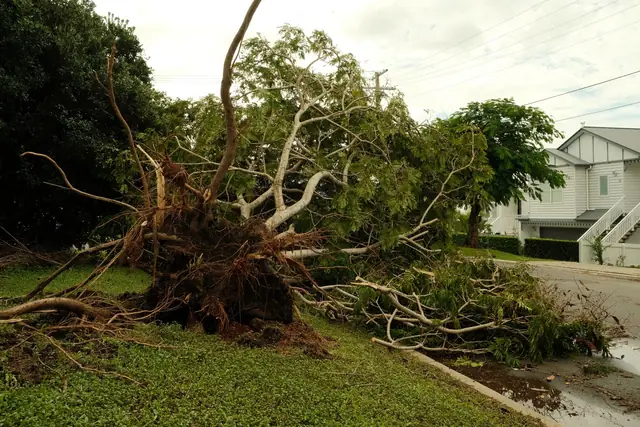
- If a tree falls on your house or another insured structure (like a garage or fence) because of a covered peril such as wind, lightning or the weight of ice and snow, your own homeowners policy generally pays for the structural damage, minus your deductible.
- It doesn't matter whose tree it was. If your neighbor's tree falls on your house, you usually file with your own insurer. If the tree was obviously dead or diseased and the neighbor ignored it, your insurer may go after the neighbor for negligence.
- Removal of the tree is usually covered only when it hits an insured structure or blocks a driveway or ramp, and that coverage is often capped at around $500 to $1,000 per event.
- A tree that falls in the yard without hitting anything usually isn't covered for removal.
- Damage to a car from a falling tree is generally a comprehensive claim on your auto policy, not your homeowners policy.
Every policy is different, so read yours or call your agent. This is general information, not insurance or legal advice.
Getting the tree removed
- Tell the tree company it's an insurance job and ask for an itemized invoice that separates removal from the structure, debris hauling, and stump grinding.
- Ask for the company's NJ Licensed Tree Care Operator number and a certificate of insurance. After big storms, out-of-town and unlicensed crews go door to door.
- Be wary of anyone who wants a large cash payment up front or asks you to sign over your insurance benefits on the spot.
Permits after a storm
Many towns relax permit rules for storm-damaged or hazard trees. Toms River, for example, waives its permit fee for dead, dying or storm-damaged trees (Toms River Township), and most of the newer town ordinances exempt hazard trees from replacement. You may still need to notify the town, so check before or right after the work. See our tree permit guide.
Prevent the next one
Most trees that fail in storms gave warning signs: dead limbs, a new lean, cracks, mushrooms at the base, or a hollow trunk. Having a licensed tree expert look at large trees near the house, and removing dead pines before storm season, is far cheaper than an insurance claim. If you want a quote, request emergency or storm tree service.
My neighbor's tree fell on my fence. Who pays?
Usually your own homeowners insurer, if the tree fell because of a covered event like wind. If the tree was obviously dead and the neighbor was warned, your insurer may seek reimbursement from them.
Will insurance pay to remove a tree that fell in my yard?
Usually not, unless it damaged a covered structure or blocks your driveway. Check your policy for the tree debris removal limit.
More guides
Areas we cover
- Toms River
- Brick
- Lakewood
- Jackson
- Manchester
- Berkeley
- Lacey
- Barnegat
- Stafford
- Little Egg Harbor
- Point Pleasant
- Point Pleasant Beach
- Plumsted
- Beachwood
- Ocean Township
Last updated October 18, 2026. Prices and rules come from the cited third-party and municipal sources and can change. They aren't quotes or legal advice. Free referral service, not a tree company. Your request goes to one independent local tree company, which may pay us for the referral.